Published March 27, 2026
Buying on a Slope: Drainage, Snowmelt, and Foundation Tips for Cedar City Homes

Sloped Cedar City Homes for Sale: Drainage, Snowmelt, and Foundation Tips
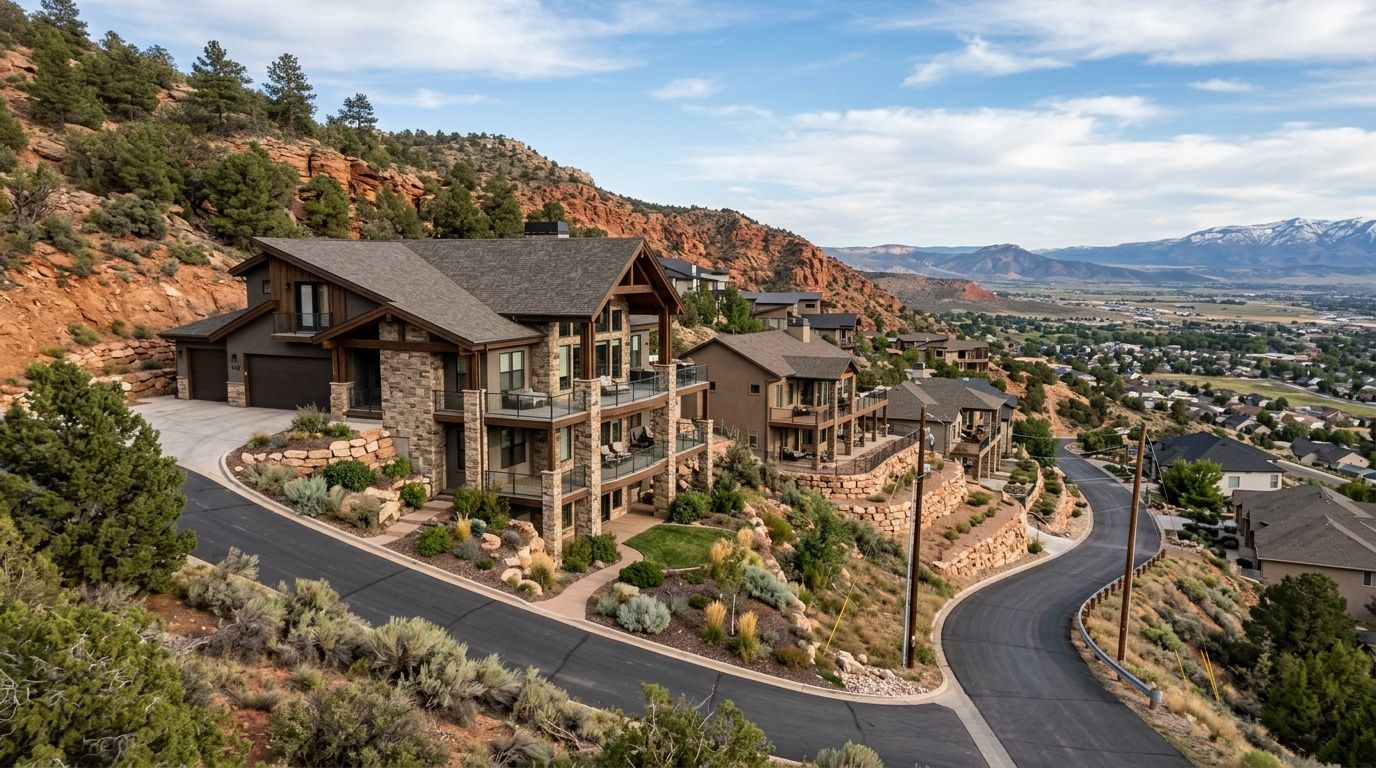
Whether you are eyeing a luxury hillside cabin in Fiddlers Canyon with sweeping mountain views or looking at a newly listed modern estate tucked against the red rocks near Enoch, buying a hillside property is a dream for many Southern Utah buyers. However, before you sign on the dotted line and claim those panoramic views, you absolutely must understand the engineering beneath your feet.
When you evaluate a house on a sloped lot, you are looking at entirely different environmental and physical pressures than you would with a flat, traditional parcel. Gravity, shifting soils, and aggressive downhill water flow mean you have to be extra vigilant during your standard real estate due diligence period. Here with The Sam Dodd Team, we want to ensure you know exactly what to look for when touring these unique properties so your investment remains safe, dry, and structurally sound for decades to come.
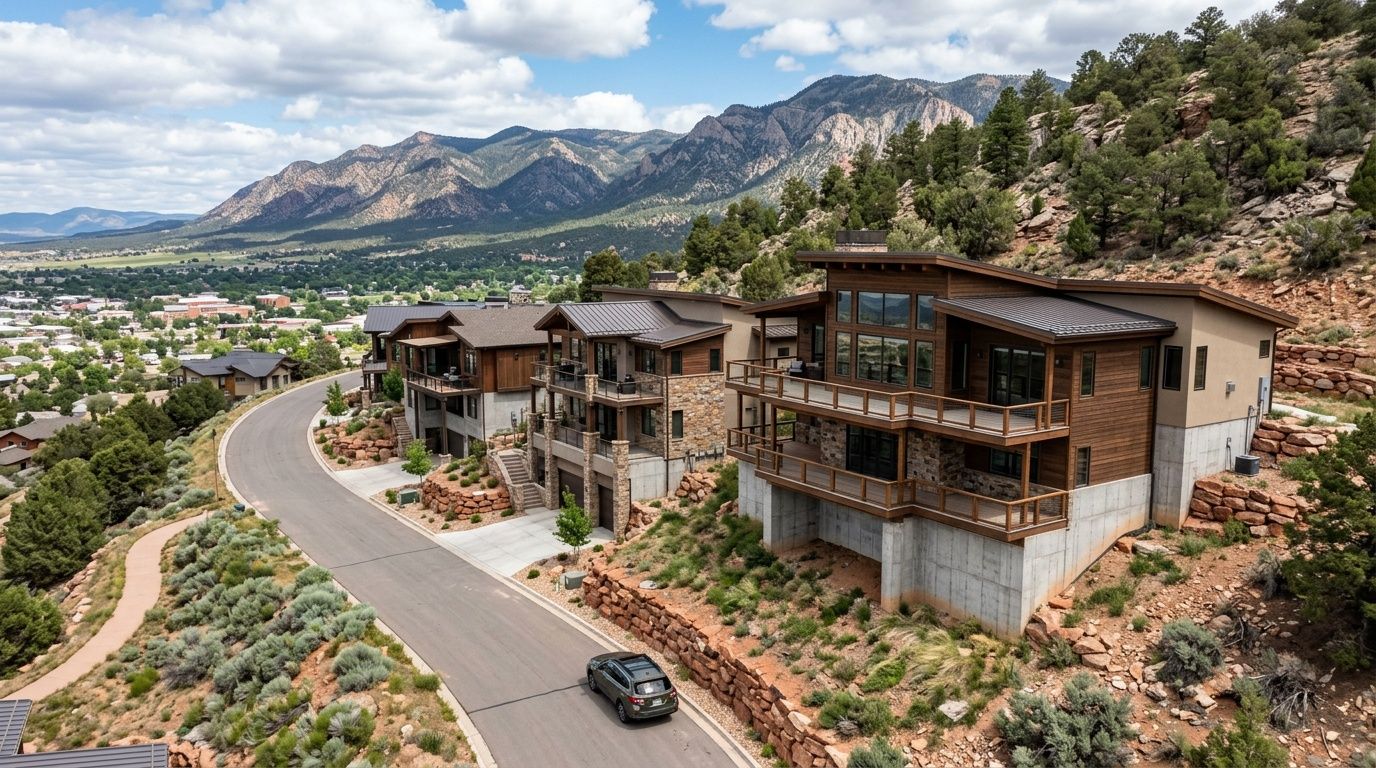
Table of Contents
- The Structural Reality of Sloped Cedar City homes for sale
- Defending the Home: The foundation drainage system
- Managing Cedar City's Spring snowmelt runoff
- The Power of Retaining Walls
- Red Flags to Avoid When Touring
- FAQ: Buying Hillside Homes in Southern Utah
The Structural Reality of Sloped Cedar City homes for sale
The absolute biggest enemy of any hillside property is unmanaged water. In Southern Utah, we deal with extreme weather patterns depending on your exact elevation and zip code. Down in Washington County and St. George, the late-summer monsoon season can dump inches of heavy rain in mere minutes, causing sudden flash surface flooding over the dry, hard-packed earth. Up here in Iron County, whether in the heart of Cedar City or out towards Parowan, our high-elevation winters bring heavy snowfall, which inevitably leads to massive snowmelt runoff in the spring.
When thousands of gallons of water flow downhill toward a property, that water has to go somewhere. If the property doesn't have the right defensive infrastructure in place, that water will pool directly against the lower levels of the home. This creates hydrostatic pressure—a heavy, invisible, and persistent force that pushes against the concrete walls of the basement or crawlspace.
Over time, this intense pressure causes cracks, wall bowing, and ultimately, severe structural failure. Furthermore, our region contains soils with high clay content that naturally expand when wet and shrink when dry, exacerbating these pressures on the concrete. This is exactly why carefully evaluating the surrounding land and grading is a crucial step when touring any sloped Cedar City homes for sale.
Defending the Home: The foundation drainage system
To combat this immense downhill pressure, the property absolutely must have a commercial-grade water diversion plan. The most critical component of this defense is the foundation drainage system.
This setup usually involves a network of perforated pipes (often called French drains) buried deep in a trench of crushed gravel at the exterior base of the structural walls. When surface or subsurface water travels down the hill and hits the gravel, it filters down, drops into the pipe of the foundation drainage system, and is safely channeled away from the home to a lower elevation, a dry well, or a municipal storm drain.
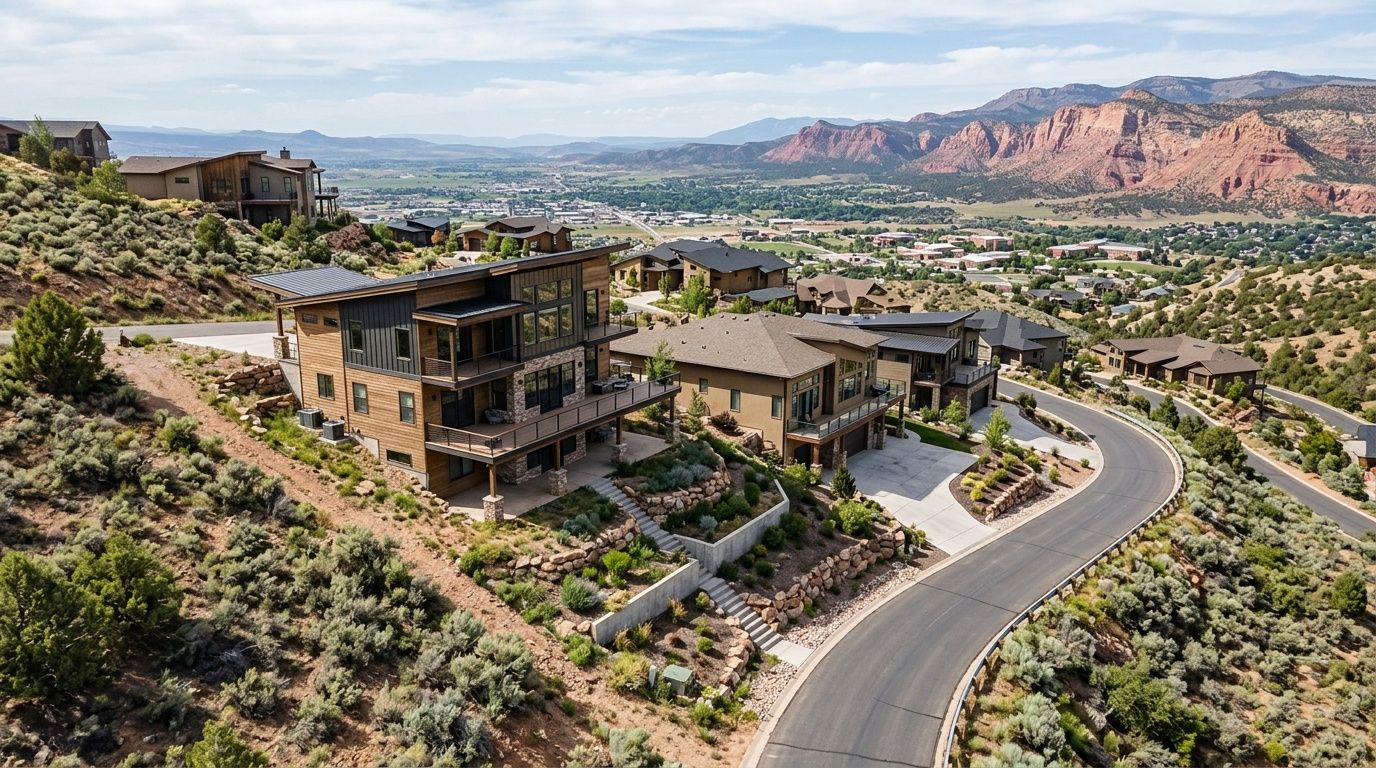
A high-quality foundation drainage system will also feature a heavy-duty waterproofing membrane applied directly to the exterior concrete to prevent any lingering moisture from seeping into the basement. If you are looking at a hillside property, always ask your home inspector to specifically evaluate these underground drains to ensure they are not clogged with silt, debris, or invasive tree roots. For authoritative, non-biased guidance on exactly how these systems are engineered to protect residential structures, you can review the EPA’s guide to managing stormwater and residential flood risks.
Managing Cedar City's Spring snowmelt runoff
If you are buying in Brian Head, Duck Creek, or high-elevation areas near Mammoth Creek, winter weather brings its own distinct set of landscaping challenges. When the temperatures rapidly rise in April and May, the still-frozen ground cannot absorb the sudden influx of liquid water. This creates an aggressive snowmelt runoff that rushes down the mountainsides and directly into residential neighborhoods.
To properly manage this seasonal snowmelt runoff without risking your real estate investment, hillside landscaping needs to be highly strategic. Here is what The Sam Dodd Team loves to see when showing a hillside home:
- Proper Regrading: The soil immediately surrounding the home should slope away from the exterior walls, dropping at least six inches over the first ten feet. This forces water to naturally flow around the home rather than straight into it.
- Swales and Berms: A swale is a shallow, vegetated ditch carved into the hillside above the home. It acts as a defensive moat, catching the water and directing it horizontally around the property rather than letting it crash straight into the back deck.
- Deep-Rooted Vegetation: Bare hillsides are highly susceptible to mudslides and topsoil erosion. Native, drought-tolerant plants with deep root systems act as a natural net, holding the hillside together during the wettest spring months.
The Power of Retaining Walls
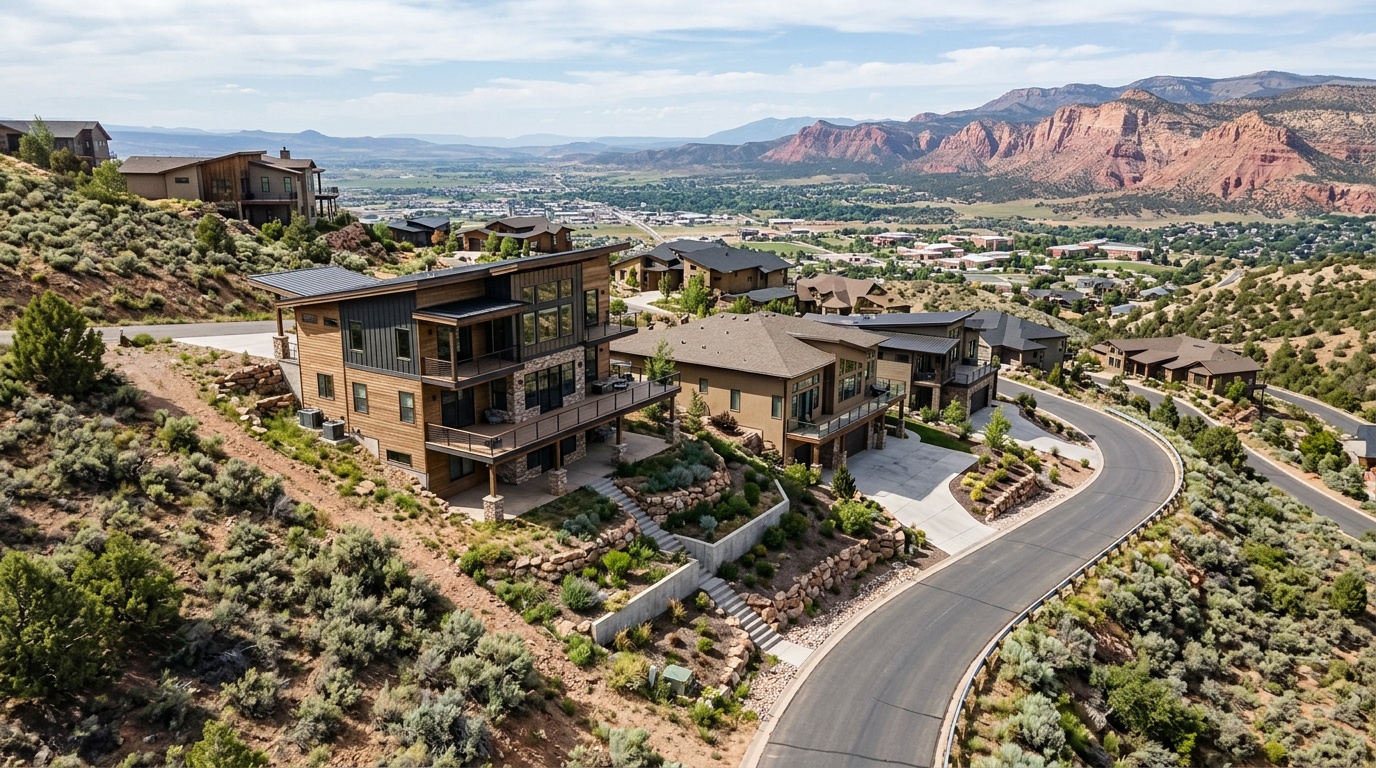
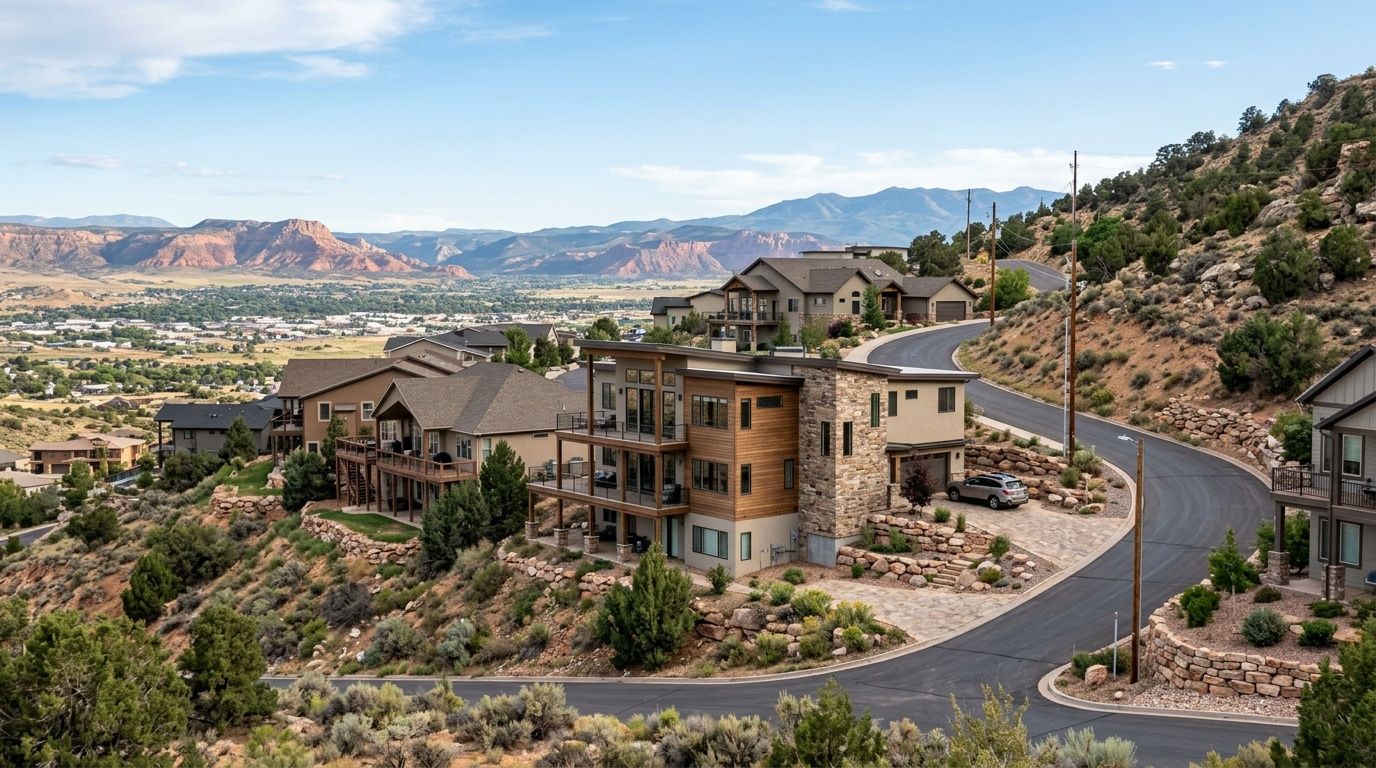
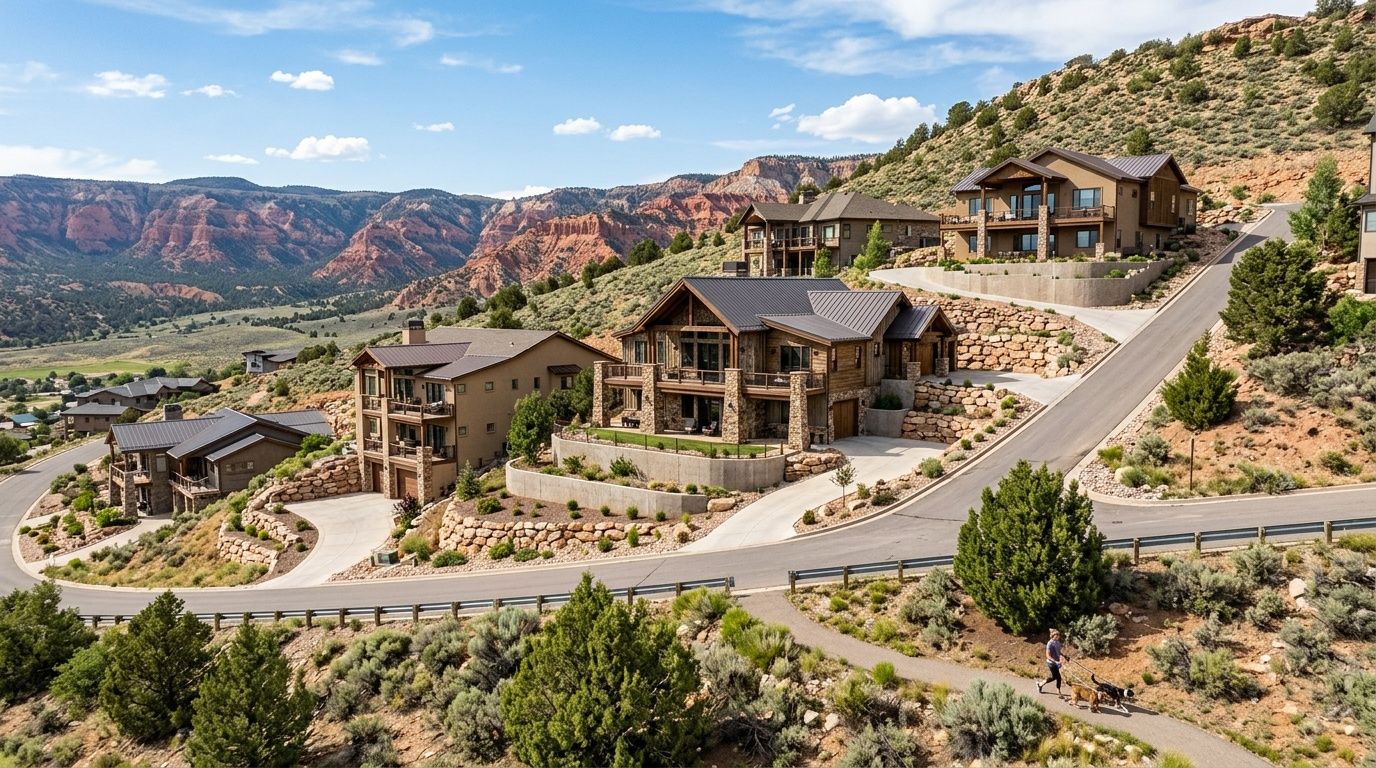
Retaining walls are another essential, heavy-duty feature for steep Southern Utah properties, from the slopes of Kanarraville to the hillsides of Newcastle. Instead of leaving one massive, steep hill in the backyard, retaining walls allow builders to create a series of flat, terraced steps. This greatly slows the velocity of downhill water and creates usable, flat yard space for beautiful patios, fire pits, and gardens.
However, a retaining wall is only as good as its internal drainage. If water gets trapped behind a concrete or block retaining wall, the sheer weight of the wet soil will eventually cause the wall to lean, crack, and collapse. When touring a property, always check the bottom base of any retaining walls for "weep holes"—small pipes that allow trapped water to escape safely through the face of the wall.
Red Flags to Avoid When Touring
When we walk a hillside property with a buyer, even if they are considering the wide-open spaces out by Beryl, we keep our eyes peeled for these serious warning signs:
- Bowing Walls: If a basement wall or exterior retaining wall is leaning inward, the soil pressure behind it is already winning the battle.
- Sticking Doors and Windows: If doors and windows on the downhill side of the house are jammed or won't latch easily, it is a major indicator of differential settlement (one side of the house is sinking into the hill faster than the other).
- Gullies in the Yard: Deep, carved-out trenches in the landscaping mulch or soil mean water is flowing much too fast and actively eroding the property's topsoil.
FAQ: Buying Hillside Homes in Southern Utah
Q: Does standard homeowner’s insurance cover soil erosion or mudslides?
A: Typically, no. Standard homeowner's insurance policies generally exclude "earth movement," which legally encompasses mudslides, landslides, and earthquakes. If you are buying on a steep slope, you will likely need to explore specialized coverage options or supplemental policies. We always recommend consulting with a local insurance broker during your due diligence period to price out these policies.
Q: Can I add underground drainage to an existing hillside home?
A: Yes, but it can be a significant and costly landscaping project. Digging trenches and laying pipe around an existing home requires moving a lot of dirt, and potentially tearing up existing patios, decks, or driveways. It's usually better to find a home with adequate drainage already in place, or negotiate the cost of a new system into your purchase price. For more information on safely retrofitting residential structures, you can consult resources from the FEMA Residential Building Science branch.
Q: Are homes on slopes a bad investment?
A: Not at all! Hillside homes often boast the most spectacular, unobstructed views in Cedar City and St. George, making them highly desirable and excellent for long-term property appreciation. Even if you are looking slightly north toward Minersville, understanding these basics is helpful. They just require a slightly more rigorous inspection process and proactive seasonal maintenance from the homeowner.
Buying a hillside property is incredibly rewarding when you know exactly what to look for. The real estate landscape in Southern Utah offers some of the most beautiful and dramatic topography in the country, and we want to help you enjoy it safely.