

Categories
Buying, Home ImprovementPublished February 27, 2026
Solar in Cedar City: Is It Worth It Here? Payback Timelines, Permits, and Resale Impact


If you are thinking about going solar in Cedar City, you are not alone. With our sunshine and big skies, solar feels like it should be an easy yes.
But here is the truth I see in real transactions and real homeowner decisions. Solar is absolutely worth it for some homes in Cedar City. For others, the payback stretches longer than people expect, usually because of three things: the roof, the utility billing rules, and winter conditions.
My goal with this guide is to give you a clear, practical way to evaluate solar in Cedar City. We will talk about payback timelines, permits, Rocky Mountain Power billing, how snow changes production, and what solar tends to do for resale value.
If you are buying a home and the listing says “solar,” this also helps you know what to ask before you close.
- Quick Answers for Cedar City Solar
- Cedar City Solar Reality Check: Sunshine and Winter Both Matter
- Utility Rules That Change the Math: Net Billing vs Net Metering
- Payback Timelines in Cedar City: A Framework That Works
- Permits and Approvals in Cedar City
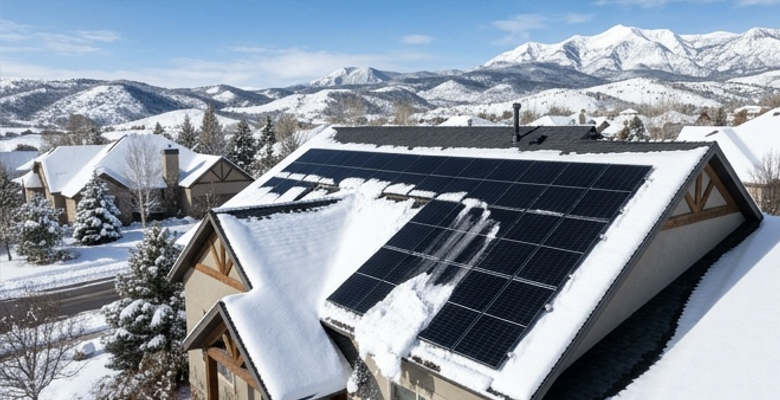
- Winter in Cedar City: Snow, Tilt, and Realistic Expectations
- Resale Impact in Cedar City: Will Solar Help Your Home Value?
- Final Thoughts From Sam
Quick Answers for Cedar City Solar
Is Cedar City good for solar?
Cedar City has strong solar potential with solid peak sun hours, which is a key ingredient for good production.
What is a realistic payback timeline?
Payback depends on system cost, your electric rate, how much power you use during the day, export credit rules, financing, and tax credits. In Cedar City, payback can be attractive for high usage households with good roofs, but it can stretch if you export a lot of midday power under net billing.
Does Rocky Mountain Power still do net metering?
Rocky Mountain Power has customer generation programs, but new customers are generally dealing with net billing frameworks and export credit rates rather than the older full retail net metering structure.
Does snow hurt solar production?
Yes. Snow coverage blocks panels from producing. Cedar City’s winter and snowfall patterns mean you should plan for seasonal dips and consider snow shedding strategies.
Does solar help resale value?
Many studies show solar can add value, and Zillow found homes with solar sold for a premium on average in their analysis. Berkeley Lab research also supports consistent value add across multiple states.
Cedar City Solar Reality Check: Sunshine and Winter Both Matter
Cedar City has strong solar potential. A simple way to understand that is peak sun hours, which represent how much usable solar energy you can expect on average. Cedar City data sources commonly show around the mid 5 range for fixed tilt peak sun hours.
That is a strong starting point.
Now the other side of the equation. Cedar City sits at higher elevation and has real winter. Temperatures can drop into the teens on the coldest days, and snowfall is part of normal life here.
Here is what that means for solar performance:
- Summer production is typically strong because days are longer and the sun is high.
- Winter production drops because days are shorter, the sun angle is lower, and snow can cover panels.
- Cold itself is not the enemy. Panels often perform efficiently in colder temperatures, but snow cover blocks light, which is the real problem.
So yes, Cedar City can be a great solar town. But winter planning needs to be part of the decision, especially if your roof pitch is low or you get shaded in winter mornings.
Utility Rules That Change the Math: Net Billing vs Net Metering
This is the section that most “solar calculators” gloss over, and it matters a lot.
Rocky Mountain Power publishes customer generation information and tariff schedules for Utah, including net billing service schedules and export credit rate structures.
The practical takeaway is this:
- Under older net metering concepts, exported energy could effectively offset usage at a value closer to what you pay for electricity.
- Under net billing structures, exported energy is credited based on an export credit rate concept, which can be lower than the retail rate you pay when you consume electricity later, like evenings. Rocky Mountain Power’s own communications around export credit updates highlight that this is meant to reflect the economic value of exported energy to the grid.
What does that mean for Cedar City homeowners?
It often makes sense to size solar for self consumption, not maximum export.
If you export a large amount midday and buy a large amount at night, your savings may be lower than you expected.
This is also why daytime loads matter.
Examples of daytime loads:
- Working from home
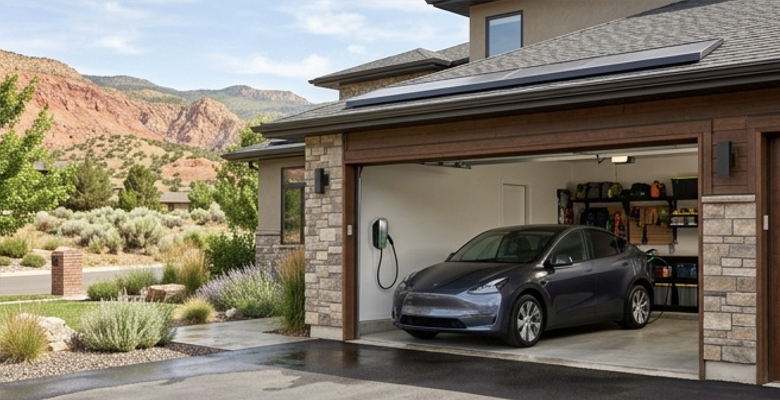
- Charging an EV during the day
- Running laundry and dishwasher in daylight hours
- Heat pump usage in the day
- Battery storage that shifts solar into evening use
The more of your solar you use directly, the stronger the economics tend to look under net billing.
Payback Timelines in Cedar City: A Framework That Works
There is no single payback number that fits every home, but you can evaluate solar with a consistent method.
Step 1: Estimate annual production
A simplified estimate uses system size times peak sun hours times 365, then applies a real-world performance factor. Peak sun hours are a helpful starting point for Cedar City.
A basic approach:
- System size (kW) × peak sun hours (per day) × 365 = annual kWh estimate
- Apply a performance factor to account for losses (inverter, wiring, temperature, snow, dust, shading)
Your installer should provide a production estimate. What I recommend is comparing it against your actual annual consumption.
Step 2: Compare savings under your billing structure
This is where net billing matters.
Your avoided cost includes:
- How much you offset at the retail rate because you used it in the home
- How much you export and get credited at an export credit rate concept
If your household is out of the house all day and most of your solar exports midday, payback may stretch.
If you work from home or have an EV, payback often improves.
Step 3: Factor incentives and tax credits carefully
The IRS Residential Clean Energy Credit page is the most important reference here. As currently stated, the credit equals 30 percent of costs for qualifying clean energy property installed from 2022 through December 31, 2025, and it is not available for property placed in service after December 31, 2025.
That means timing can be a major lever. If you are considering solar and intend to rely on that credit, you need to confirm eligibility and timing with your tax professional and installer.
Step 4: Factor financing honestly
Cash purchases have the cleanest payback math.
Financing can still be worth it, but your real metric becomes:
- Monthly payment versus monthly electric bill reduction
- Total cost over time including interest
- Whether the system is sized and designed for self consumption
Permits and Approvals in Cedar City
Most homeowners want to know: “What permits do I need, and how long does it take?”
In Cedar City, the city provides building permit forms and guides through its Building Division resources.
A solar installation typically involves:
- Building and structural review for mounting on the roof or ground mount
- Electrical permit and inspection for wiring, inverter, and interconnection equipment
- Utility interconnection approval through Rocky Mountain Power’s process for customer generation
A quality installer usually handles permitting and utility paperwork as part of the project. Still, as a homeowner or buyer, you want confirmation that:
- permits were pulled
- inspections were completed
- the system was interconnected legally
This matters for safety, warranty, and resale.
Winter in Cedar City: Snow, Tilt, and Realistic Expectations
If you are going solar in Cedar City, winter planning is not optional.
Cedar City winters can be cold and snowy, with temperatures ranging down into the teens on the coldest parts of the year, and meaningful snowfall patterns.
What snow does to solar
- Snow blocks sunlight from reaching the cells.
- A small amount of snow can reduce production significantly.
- Panels often shed snow faster than roofs because panels warm slightly when the sun hits them, but shedding depends heavily on tilt and snow type.
Practical design tips for Cedar City conditions
- Roof tilt helps. Steeper angles shed snow faster than low-slope roofs.
- Panel placement matters. If panels sit where roof snow slides onto them, they can stay covered longer.
- Avoid deep shade zones. Winter sun is lower, so morning and afternoon shade can be worse than you expect.
- Consider equipment choices. Many homeowners prefer module-level power electronics (like microinverters) because partial shading or partial snow coverage can have less impact than a single string configuration in some scenarios. Discuss this with your installer based on roof layout.
Clearing snow safely
If you plan to clear panels, do it safely and thoughtfully:
- Avoid climbing on icy roofs
- Use tools designed for roof snow removal if needed
- Many homeowners simply accept lower winter production and let the sun clear panels when conditions allow
Do you need a battery?
Batteries are not required for solar to work, but they can:
- increase self consumption
- provide limited backup power
- reduce dependence on exported credits under net billing
Batteries add cost, so the decision is strategic:
- If you need outage protection for work-from-home, medical needs, or well pumps, a battery may be worth it.
- If your goal is purely payback, a battery can lengthen payback, but it can still improve your real-life resilience.
Resale Impact in Cedar City: Will Solar Help Your Home Value?
Solar can help resale, but the details matter.
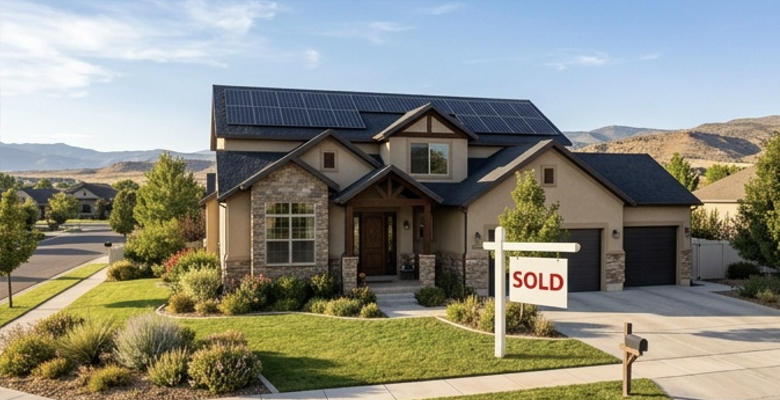
Zillow’s research found homes with solar sold for 4.1 percent more on average than comparable homes without solar in their analysis.
Berkeley Lab’s “Selling Into the Sun” research also supports that solar has added measurable value across multiple states and thousands of transactions.
What matters most for resale value
In real-world Cedar City transactions, buyers tend to focus on:
- Owned vs leased
Owned systems are usually simpler. Leases or PPAs can complicate financing and buyer willingness. - Documentation
Permits, interconnection approval, warranties, and production info help buyers feel confident. - System size versus bill
Oversized systems that export heavily may not pencil out under net billing rules. Buyers want savings that match their lifestyle. - Roof condition
If the roof will need replacement soon, buyers worry about removing and reinstalling panels.
If you check those boxes, solar can be a real selling feature, especially for buyers who already want lower operating costs.
Final Thoughts From Sam
Solar in Cedar City can absolutely be worth it, but it is not a one-size-fits-all decision. Cedar City has strong solar potential, but Rocky Mountain Power billing structures, winter snow realities, roof conditions, and your usage pattern all influence the payback timeline.
If you want to make a smart decision, do it in this order:
- Confirm your roof and shading profile
- Understand your bill and daytime usage
- Factor net billing and export credit reality
- Confirm permitting and interconnection requirements
- Think through winter performance and backups
- Keep resale in mind, especially ownership and documentation
If you want help evaluating solar on a specific Cedar City home, or comparing a home with solar versus one without before you close, reach out to me directly. I will help you pressure test the numbers and the resale implications so you can move forward confidently.

Sam Dodd
Operator/Agent | Sam Dodd Team | eXp Realty | PLACE
or another way