
Categories
Buying, Buying/SellingPublished April 27, 2026
The Complete Guide to Buying Horse Property in Iron County

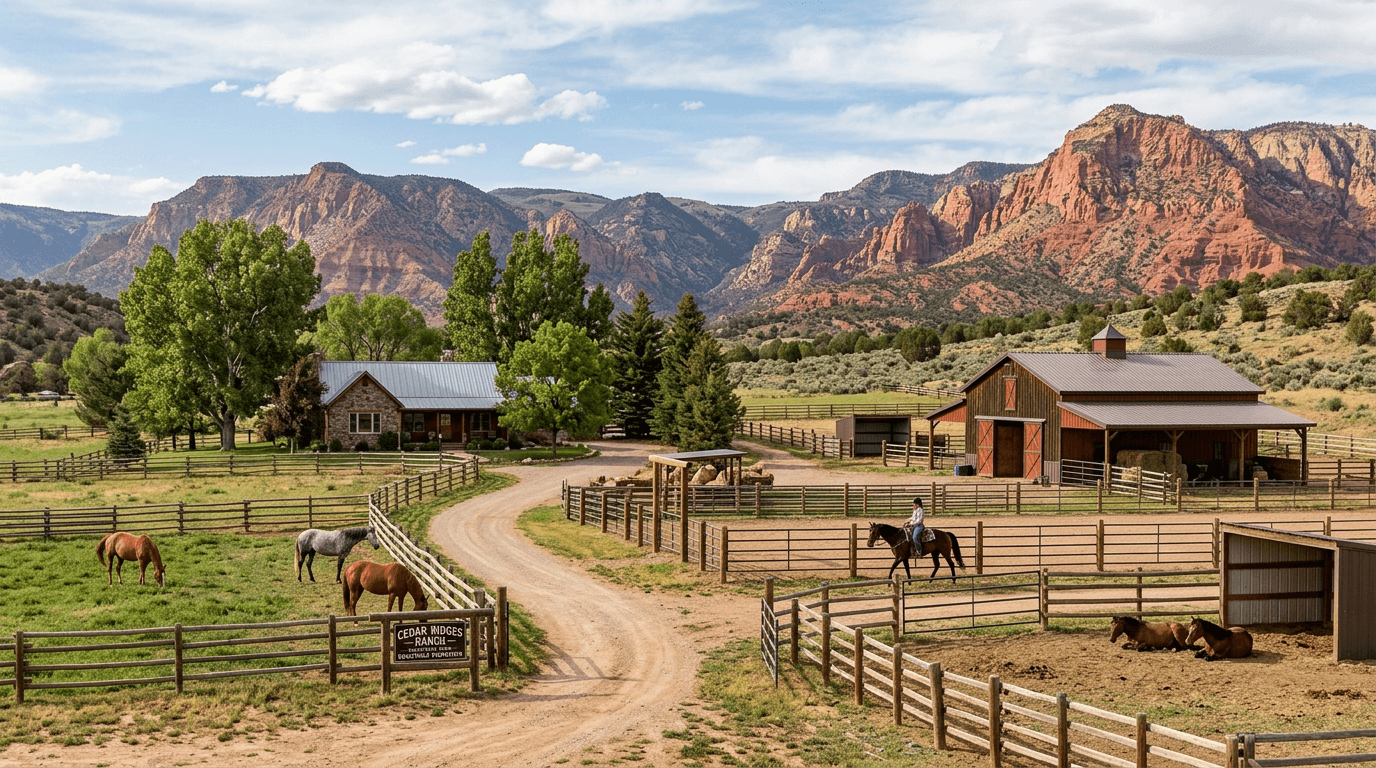
The Complete Guide to Buying a Horse Property for Sale in Cedar City
The dream of owning a sprawling ranch under the wide-open Utah sky is a cornerstone of the American West. As we look at the 2026 real estate market, the demand for a Horse Property for Sale in Cedar City has surged as more people look to escape urban congestion for a more self-sufficient, equestrian-focused lifestyle in one of the many Cedar City communities. However, purchasing Equestrian Properties in Utah is a vastly different undertaking than buying a standard suburban home.
Whether you are a professional trainer looking for a multi-stall facility or a hobbyist searching for Iron County Land for Sale to build your dream barn, the due diligence required is extensive. You aren't just buying a house; you are buying an ecosystem, a legal entitlement to water, and a specific zoning allowance that must be protected.
- Zoning: The Foundation of Your Search
- Water Rights: The "Wet" Truth
- Soil and Topography: Why the "Dirt" Matters
- Infrastructure and "The Bones"
- FAQ: Iron County Equestrian Real Estate
Zoning: The Foundation of Your Search
The most critical mistake a buyer can make is assuming that "lots of land" automatically means "horses allowed." When searching for a Horse Property for Sale in Cedar City, we first look at the zoning map.
Iron County utilizes several agricultural and rural residential zones. Typically, you are looking for zones like A-20 (Agricultural, 20-acre minimum) or RA-20 (Rural Agriculture), common in rural areas near Summit. These designations determine your "animal unit" allowance. For example, some zones may allow one horse per half-acre of "usable" land. If you buy a 5-acre property that is 4 acres of steep, rocky hillside, your animal allowance might be much lower than you expect. This is why having a team that understands Iron County Land for Sale is vital to your success.
Water Rights: The "Wet" Truth
In the West, water is more valuable than the land itself. When evaluating Equestrian Properties in Utah, the presence of a well does not guarantee you can water your horses or irrigate a pasture.
Utah operates under the "Prior Appropriation Doctrine" (first in time, first in right). When Buying Land in Iron County, we must verify the "beneficial use" associated with the water rights on the deed. If the rights are only for "domestic use," you might legally be limited to indoor household use, leaving your horses thirsty and your pastures dry—a crucial detail buyers out toward Minersville must watch closely. We meticulously review the records at the Utah Division of Water Rights to ensure the "wet water" actually follows the property.
Soil and Topography: Why the "Dirt" Matters
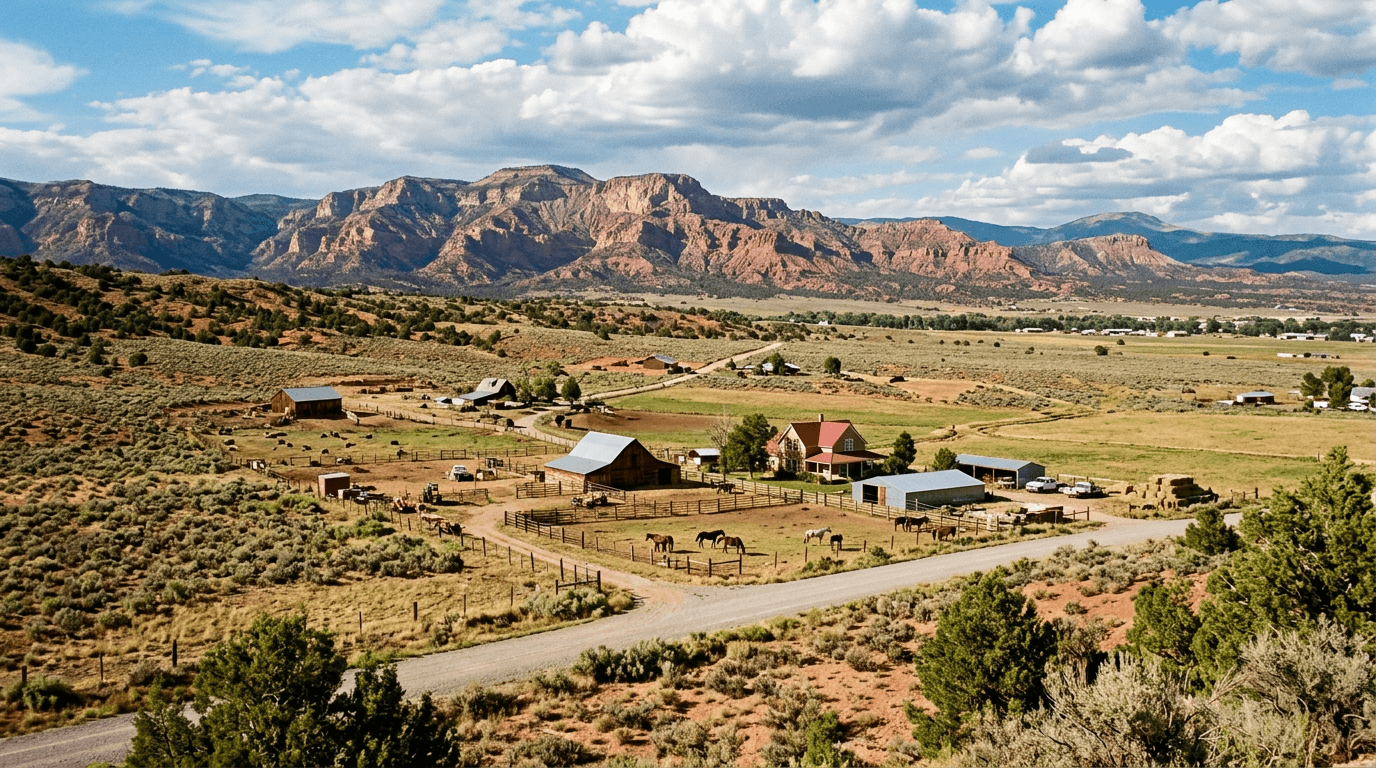
Not all Iron County Land for Sale is created equal. The geology of Cedar City, Utah varies wildly from sandy loams to heavy, expansive clays, and even rocky terrains up near Mammoth Creek.
- The Clay Factor: Heavy clay soil can be a nightmare for horse owners. It retains water, leading to deep mud in the spring that can cause hoof rot and thrush. In the summer, it dries into a concrete-like surface that is hard on a horse's joints.
- Drainage: We look for Equestrian Properties in Utah that have a slight natural grade. You want water to move away from your barn and arena areas, not pool in them.
- Forage: If you plan on grazing, the quality of the soil and the existing vegetation (like alfalfa or native grasses) will dictate your supplemental feed costs.
Infrastructure and "The Bones"
If you are looking at a Horse Property for Sale in Cedar City that already has structures, we perform a "lifestyle inspection." A standard home inspector may not notice that the barn's electrical isn't up to code for high-draw items like tank heaters or that the fence height isn't sufficient for certain breeds.
When evaluating Equestrian Properties in Utah, we look for:
- Barn Placement: Is it situated to block the prevailing winds?
- Arena Footing: Does the property have a dedicated area with proper drainage and sand-mix footing?
- Trailer Access: Is there enough room for a 40-foot gooseneck trailer to turn around without backing up a quarter-mile?
For authoritative guidelines on agricultural building safety, the Natural Resources Conservation Service (NRCS) offers fantastic land-management resources.
FAQ: Iron County Equestrian Real Estate
1. Is it expensive to keep horses in Cedar City, Utah?
Compared to California or the East Coast, it is much more affordable. Our proximity to local hay farmers in the Parowan and Beryl areas keeps feed costs lower, especially if you look slightly south towards New Harmony. However, you must factor in the cost of water and seasonal supplements.
2. Can I drill a well on any Iron County Land for Sale?
No. Most areas in the Cedar Valley are "closed" to new water appropriations. You generally have to purchase existing water rights and transfer them to your parcel, which can be an expensive and lengthy legal process.
3. Are there public equestrian facilities nearby?
Yes! The Diamond Z Arena at the Cross Hollows Events Center is a premier facility that hosts rodeos, barrel races, and open riding nights. It’s a great way to connect with the local horse community.
4. What kind of fencing is best for Southern Utah?
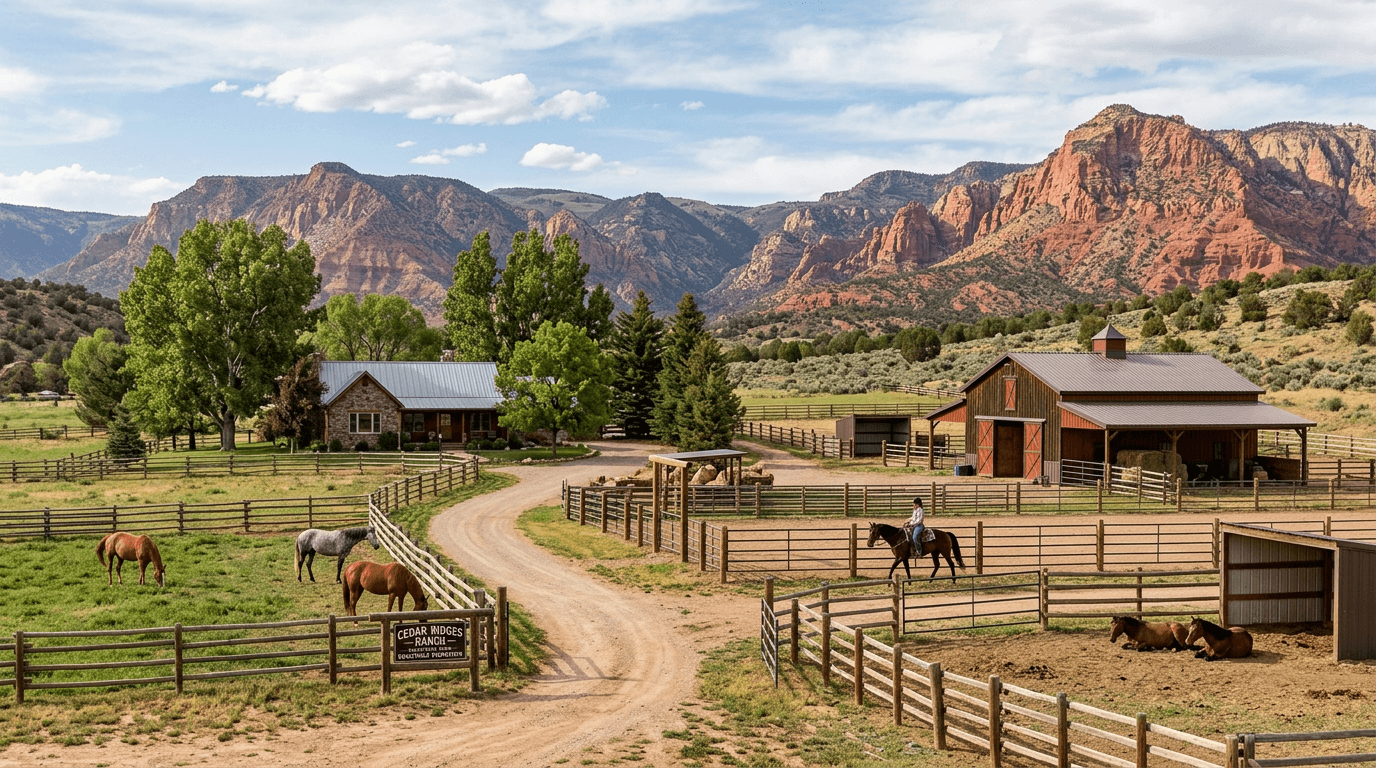
While wooden post-and-rail is classic, many locals prefer pipe fencing or "no-climb" wire with a top rail. The intense UV rays in Utah can warp and weather wood very quickly, making metal a much lower-maintenance choice for Equestrian Properties in Utah.
5. Do I need a specialized Realtor for horse property?
Yes. A standard residential agent may not know how to read a water deed or identify problematic soil. At The Sam Dodd Team, we understand the specific needs of horse owners because we live the lifestyle ourselves. When you're ready to search for your perfect ranch or barn setup, we are here to guide you.

Sam Dodd
Operator/Agent | Sam Dodd Team | eXp Realty | PLACE
or another way