
Categories
Buying/Selling, EventsPublished June 22, 2026
Why We're Called "Festival City USA": A Brief History

Why We're Called "Festival City USA": A Brief History
Table of Contents
- The Cultural Outpost That Defies the High-Desert Cliché
- From Iron Dust to Center Stage: A Blueprint for Community Resilience
- The Year-Round Economic Engine: How Events Anchor Local Property Values
- The Investor’s Playbook: Monetizing the Cultural Tourism Surge
- Your VIP Backstage Pass: Why The Sam Dodd Team Owns the Market
- The "No-Nonsense" Iron County Real Estate FAQ
- Stop Being a Spectator: Claim Your Piece of the Festival City
The Cultural Outpost That Defies the High-Desert Cliché
Most gateway mountain towns offer incredible hiking trails but fail to deliver any real cultural heartbeat. You get the scenery, but you sacrifice the arts, the entertainment, and the community events that make a neighborhood actually feel alive. Cedar City shatters that mold entirely. Here, world-class outdoor recreation at Zion National Park and Brian Head Ski Resort collides directly with elite theatrical performances and massive athletic tournaments.
"Festival City USA" is not just a cute tourism slogan cooked up by a marketing board. It operates as a massive, tangible economic engine. This high-altitude cultural density is currently pulling out-of-state buyers, remote workers, and savvy investors into the Cedar City real estate market at record speeds. People are leaving congested metropolitan areas and searching for a specific blend of safety, outdoor access, and community engagement. Buying property in Cedar City means buying into a perpetual, year-round economy that other rural transition towns simply cannot match. You are acquiring an asset in a city that knows exactly how to draw a crowd and keep them entertained.
From Iron Dust to Center Stage: A Blueprint for Community Resilience
Cedar City was built on pure, undeniable grit. Back in 1851, pioneer settlers arrived in this high-desert valley to mine iron ore, creating the gritty foundation of the original Iron Mission. By 1923, the arrival of the railroad transformed the area into the official Gateway to the Parks, bringing early tourists eager to see the red rock canyons. But the real structural stability of this town comes from the people who actually live here.
In the late 1890s, local residents literally mortgaged their own homes and farms to finance the first building of what is now Southern Utah University. Men braved brutal winter blizzards, using teams of horses to haul lumber down from the nearby mountains just to ensure the school would be built. That level of intense community pride forms the bedrock of the local real estate market today. You want to buy property in a town where the residents are fiercely protective of their growth and infrastructure.
The massive cultural shift happened decades later. The Utah Shakespeare Festival launched in 1961, bringing world-class theater to a rugged desert environment. The Utah Summer Games followed in 1986, turning the city into a statewide hub for amateur athletics. A community willing to physically finance its own university and build premier arts festivals out of the red dirt is exactly the kind of bulletproof market where long-term property values thrive. Neighborhoods here remain highly desirable because the community actively and aggressively invests in its own backyard.
The Year-Round Economic Engine: How Events Anchor Local Property Values
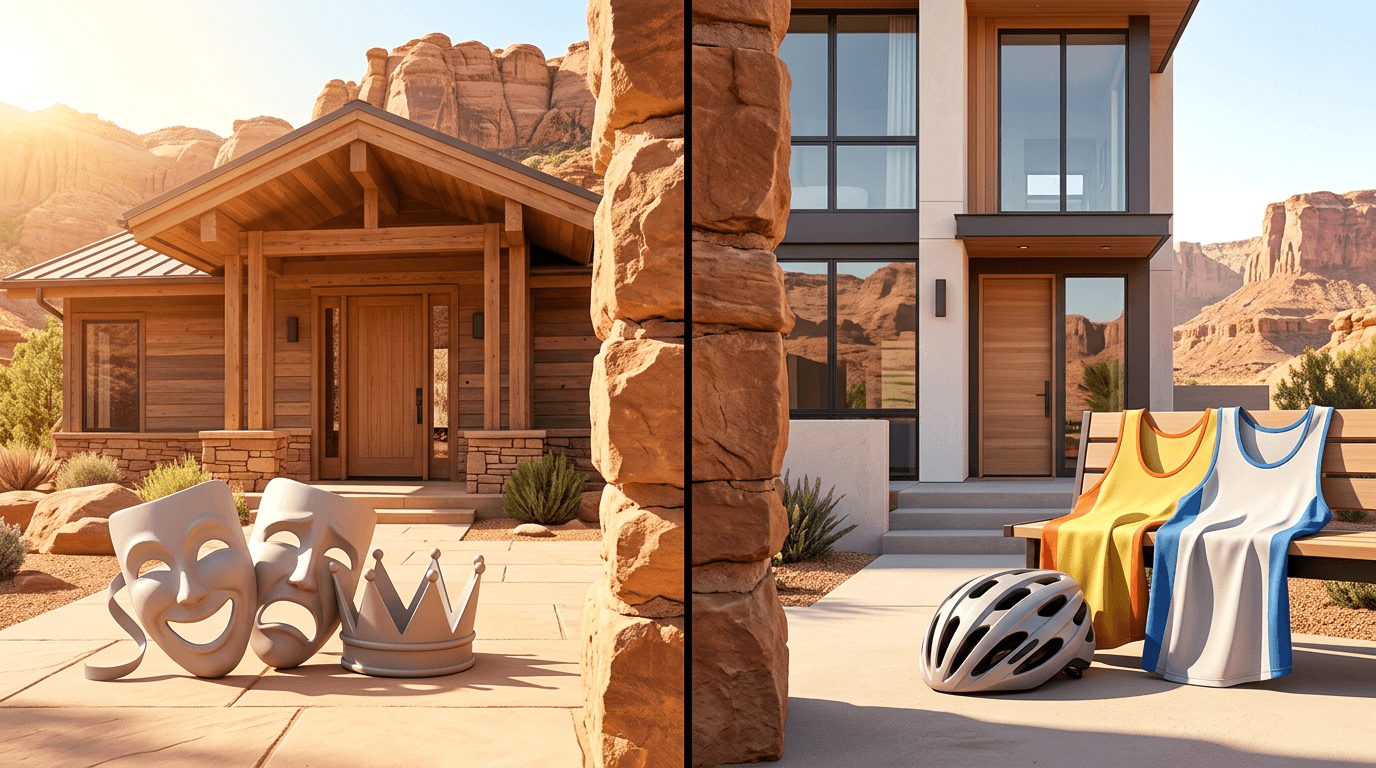
The city officially adopted the "Festival City USA" moniker in 2004, cementing its status as a premier cultural hub. For property owners and investors, this constant rotation of events acts as a massive financial anchor. Traditional resort towns often suffer from severe dead seasons where restaurants close, jobs vanish, and local infrastructure stalls out. Cedar City avoids this trap entirely by stacking events back-to-back across the calendar.
When the heavy winter ski traffic at Brian Head starts to slow down, the Tony Award-winning Shakespeare Festival ramps up production. When the summer theater season wraps, massive livestock shows like the Cedar City Livestock and Heritage Festival take over. You have thousands of athletes arriving for the Utah Summer Games, mountain bikers descending on the local trail systems for tournaments, and a constant stream of university events filling any remaining gaps. This perpetual activity eliminates the boom-and-bust cycle that plagues other markets.
For residential buyers, this translates into a massive lifestyle and equity asset. You secure the safety, low crime rates, and charm of a small town, but you benefit from a highly active local economy. The constant influx of outside tourism dollars keeps municipal infrastructure heavily funded, ensures local dining spots stay open year-round, and pushes residential home values on a steady, predictable upward trajectory.
The Investor’s Playbook: Monetizing the Cultural Tourism Surge
Savvy real estate investors look at Cedar City and see an immediate opportunity to generate serious cash flow. The rich history of festivals directly fuels both the long-term and short-term rental markets. When thousands of tourists, athletes, and theater-goers flood the city for the Utah Summer Games or a weekend at the Randall L. Jones Theatre, nightly accommodation demand spikes aggressively. Hotels book up months in advance, pushing premium pricing into the private rental sector.
However, monetizing this cultural tourism surge requires precise tactical execution. Iron County zoning ordinances are notoriously strict and highly specific. Purchasing an investment property blindly without verifying the local rules is a massive financial risk. A home might look like a perfect vacation rental on paper, but the city code might dictate otherwise.
Buyers must actively navigate several major hurdles:
- Municipal short-term rental caps that strictly limit the number of active licenses allowed in specific neighborhoods.
- Rigid Homeowners Association rules that frequently ban nightly rentals entirely or require minimum thirty-day leases.
- Parking regulations that require dedicated, paved off-street spaces for every permitted bedroom in a rental property.
- Specific zoning boundaries that separate standard residential blocks from student housing overlay zones near Southern Utah University.
Relying on generic online searches or out-of-date maps will leave you exposed to severe code violations and heavy fines. You need expert local guidance to identify which properties are legally zoned to print money and which ones will lock you into a standard twelve-month lease.

Your VIP Backstage Pass: Why The Sam Dodd Team Owns the Market
Finding real success in Festival City requires a real estate partner who understands both the cultural heartbeat and the raw economic data of Iron County. The Sam Dodd Team serves as your definitive local insider. We do not just open doors, point out nice countertops, and write standard contracts. We dominate this market by providing our clients with strategic advantages that out-of-town or flatland agents simply cannot replicate.
Partnering with our team gives you a true VIP backstage pass to the best real estate in Southern Utah. We provide our clients with aggressive, high-value perks designed to win in a competitive environment:
- Proprietary zoning navigation to ensure your next investment property complies with all local short-term rental laws before you even write the offer.
- VIP off-market property matchmaking that specifically targets homes near the SUU campus and downtown festival hubs before they hit the public MLS.
- Boots-on-the-ground relocation tours that give out-of-state buyers a real, unfiltered feel for the neighborhoods, event centers, and local commute times.
- Aggressive digital marketing syndication for sellers looking to capitalize on current buyer demand and extract maximum equity from their historic properties.
Using an agent who does not intimately understand the nuances of the Cedar City event calendar or the specific zoning boundaries around the university is a costly strategic error. We protect your bottom line by treating every single transaction as a high-stakes financial investment.
The "No-Nonsense" Iron County Real Estate FAQ

Stop Being a Spectator: Claim Your Piece of the Festival City
Inventory near the historic downtown core and key festival venues remains fiercely contested. The steady, predictable flow of tourists, university students, and remote workers guarantees that Cedar City will continue to expand. Waiting for a magical market cool-down simply means you will pay thousands more later while missing out on active equity growth and immediate lifestyle upgrades. Stop sitting on the sidelines watching other people build lasting wealth in Iron County. Ditch the guesswork and partner with the most dominant, connected squad in Southern Utah. Text or call The Sam Dodd Team right now to lock down your piece of Festival City and start executing a winning real estate strategy today.

Sam Dodd
Operator/Agent | Sam Dodd Team | eXp Realty | PLACE
or another way